
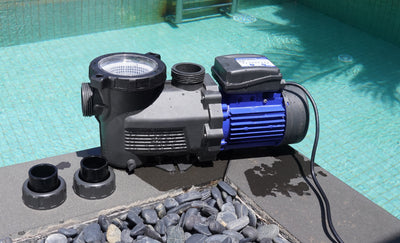


Quick answer: compare the system’s jobs before you compare the labels
A variable-speed pump gives the owner the ability to adjust operating speed. A single-speed pump operates at one fixed speed. That difference can matter—but it does not make one type the automatic fit for every pool. The better comparison starts with your system: filtration, cleaning, water features, heating support, existing plumbing, filter documentation, electrical supply, and the controls you can actually use. Once those facts are documented, you can compare exact models without turning a broad product category into a promise.
What changes when a pump can adjust speed?
A single-speed pump runs at its designed operating speed whenever it is on. A variable-speed pump can be set to different operating speeds for different tasks, within the limits of that model and its control system. ENERGY STAR explains that a pool’s speed needs can vary by function and that certified variable-speed pumps can be programmed to match an appropriate speed. That is a useful operating concept: filtration, a cleaner, and a water feature may not require the same setting. It is not proof that every variable-speed model will fit your pool or deliver the same result. Read the ENERGY STAR overview.
Start with the jobs your circulation pump performs
List every job that depends on the main pump:
- Routine filtration.
- A pressure-side cleaner or another cleaning function.
- A heater or heat-pump flow requirement.
- Water features, spa spillovers, or solar circulation.
- Seasonal opening, closing, or recovery tasks.
This list helps you separate a simple filtration-only need from a system that must support different operating conditions. It also prevents a common mistake: selecting a pump around the most demanding job without checking how that choice affects routine operation.
Use this decision matrix before you shop
| Decision question | What to verify | Why it belongs in the comparison |
|---|---|---|
| What jobs does the pump perform? | Filtration, cleaning, heating, features | Different tasks may call for different documented settings or flow requirements |
| What can the system support? | Filter manual, plumbing layout, valves, return fittings | The pump must fit the whole circulation system |
| What is the electrical path? | Existing supply, model requirements, qualified-installation needs | Voltage or wiring changes are not a casual DIY step |
| What control do you need? | Manual settings, timer, controller, approved programming | A feature has value only if it can be used correctly in the installed system |
| What does the exact model document? | Pump curve, approved installation, limits, service information | Category-level claims cannot substitute for model-specific documentation |
| What is the local rule context? | Current local requirements or replacement rules | Requirements can vary and should be checked locally |
Use the table to make a shortlist. Do not use it to assume that a variable-speed model is a “universal replacement” or that a single-speed model is automatically inadequate.
Efficiency language needs a closer look
ENERGY STAR’s pool-pump criteria use product categories, hydraulic-horsepower size classes, and a Weighted Energy Factor (WEF) for certified products. That can help you understand why a comparison should look beyond a motor label. It does not certify an unlisted pump, establish a model’s operating cost, or prove a payback period for your home. See the product criteria. If a product page advertises savings, quiet operation, a warranty, or compatibility, ask for the exact model documentation and the conditions behind the claim. Compare like with like: same pool task, same installation conditions, and the same kind of evidence.
Do not turn a pump comparison into an electrical how-to
A replacement can involve voltage, wiring, grounding, bonding, circuit protection, and local code requirements. Those are safety-sensitive questions, not comparison-chart details. The CPSC identifies pumps and filters as electric pool equipment in a wet environment. Do not alter wiring, grounding, bonding, breakers, or protective devices based on a blog article. Review the CPSC guidance. If the proposed unit differs from the current electrical setup, involve a qualified professional before purchase or installation.
Make the final choice model by model
After you decide which operating approach fits your pool, compare exact models using verified documents:
- Confirm the installed filter’s limits.
- Confirm pipe and connection requirements.
- Compare actual pump curves at the system’s expected head.
- Confirm the electrical installation path.
- Review controller/timer requirements and manufacturer instructions.
- Keep a record of the documents used in the decision.
For a replacement-specific checklist, read How to Choose a Pool Pump Replacement. It will help you organize the system records before you narrow the model list.
The useful takeaway
Variable speed means adjustable operation; single speed means fixed operation. The right choice is still a system-fit question. Start with the jobs your pool needs the pump to do, compare the documented limits of the equipment around it, and bring in qualified help for electrical or uncertain compatibility questions.

About the author