
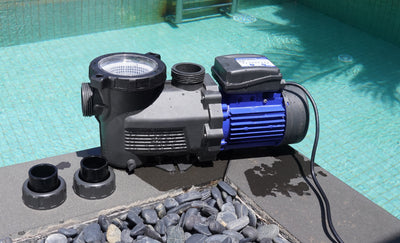


Do not choose a replacement pool pump by horsepower alone, by a product photo, or because another unit "looks close." A replacement pump has to fit the current system, the exact electrical setup, and the installation conditions at your home.
The useful first step is not a shopping filter. It is a fit-check packet: collect the records you can verify safely, then keep the remaining questions open until model-specific documentation or qualified support can answer them.
Because pool pumps are electrical equipment in a wet environment, do not open electrical enclosures or attempt wiring changes while gathering information. The CPSC's pool electrical-safety guidance is a reminder that safety boundaries come before a purchase decision.
Start with the current system, not the product listing
A product-family name, horsepower label, or retailer headline does not establish that a replacement will fit. Begin with the installed pump and the system around it.
If the current label is visible and safe to read, record the exact model identifier. If it is not, use installation paperwork, service records, invoices, or a qualified technician. Do not dismantle the pump to find a label.
The current model is not a replacement recommendation. It is the starting point for finding the correct documentation and identifying which conditions still need to be verified.
Build your replacement-pump evidence packet
Gather what you can from a dry, safe position:
- The exact current pump model, if readable
- Photos of the visible pump, nearby filter, valves, controls, and equipment-pad layout
- The current manual, installation paperwork, and recent service records
- The reason for replacement, such as a no-start symptom, visible leak, unusual noise, renovation, or a service recommendation
- Any controller display, message, or known operating condition
These items are records, not instructions to loosen fittings, disconnect wires, or measure live electrical parts. If you do not recognize a connection or control, leave it on the open-question list.
Separate known facts from fit questions
A better comparison starts when you stop treating every detail as equally certain.
You may be able to collect safely: the exact current model, readable external labels, visible equipment photos, existing paperwork, the reason for replacement, and available space around the equipment pad.
You still need to verify for the exact replacement and site: electrical requirements, plumbing or interface compatibility, system flow and head requirements, automation or control compatibility, installation scope, and local-code or licensed-professional requirements.
The second list is not a failure. It is the part of the decision that should not be guessed from a photo, a category name, or a single number.
Use the current manual as a document, not a shortcut
The current pump's manual is the right place to begin because it identifies the model it covers. AQUASTRONG maintains a product-manual index with model-specific manuals, installation guides, and technical specifications.
Read every manual as model-specific. A document for one pump does not prove that another pump will share the same fit, control requirements, electrical conditions, or installation needs.
When a model is unclear, support or a qualified pool professional can tell you what additional information is needed. Choosing a manual by appearance is not a reliable substitute.
Ask questions that can be verified
When you contact product support or a pool professional, share the evidence packet and ask for answers tied to the exact model and system:
- Which model-specific documents should be compared with my current system?
- What installation information must be confirmed before a replacement can be evaluated?
- Which current conditions remain unknown?
- Does the scope require a qualified pool professional or licensed electrician?
- What documentation supports the proposed fit?
These questions keep the conversation focused on verifiable requirements instead of a generic promise of compatibility.
Recognize when online-only selection is too risky
Pause and use qualified help when you cannot identify the current pump, when controls or electrical conditions are unclear, when the old pump failed after water exposure or repeated shutdowns, or when the proposed replacement cannot be supported by model-specific documentation.
Treat phrases such as "universal" or "plug-and-play" as prompts to ask for the actual conditions of fit. A lower price or a matching horsepower label does not replace verified requirements.
Make the next choice easier
The best replacement-pump decision begins before you open a product page. Gather the current system's records, use the exact-model manual, and keep unresolved electrical, plumbing, control, and compatibility questions visible. That gives you a safer basis for comparing options and discussing a recommendation with qualified support.

About the author