
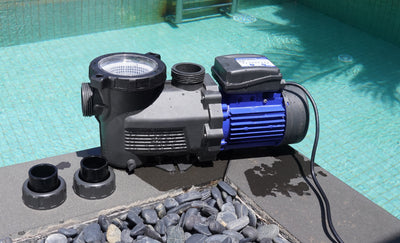


Quick answer: size the system, not just the motor
The right pool pump size is not a single horsepower number pulled from a chart. It is a system-fit decision: how much water the pool holds, how the current plumbing and filter behave, what flow the system can support, and what the equipment documentation says about the installation. A useful starting point is to document the pool and the existing equipment before shopping. That keeps a replacement conversation from turning into “bigger must be better.” It also makes it easier for a pool professional to spot a mismatch before you buy.
Start with the facts you can document safely
You do not need to disassemble equipment to build a good first worksheet. Record:
- Pool shape, length, width, and shallow/deep dimensions.
- The pool-volume estimate in gallons.
- The current pump’s model label, voltage, and listed connections.
- Filter make/model and any maximum-flow or pressure information in its manual.
- Visible pipe diameter and whether the equipment pad has features such as a heater, cleaner, water feature, or solar loop.
- Any symptoms that led to the sizing question: weak circulation, a new filter, a replacement pump, or a change in how the pool is used.
A pool-volume calculator can help organize the measurement step for common shapes. Keep the result as an input, not a final equipment recommendation. Pentair’s calculator is one example of a tool that estimates volume from dimensions; it is not a compatibility tool for your system.
Use turnover math as a planning check—not a universal rule
Turnover time describes how long it takes for a volume of water equal to the pool volume to move through the circulation system. The basic relationship is: `turnover time = pool volume ÷ actual system flow` For example, if a hypothetical 15,000-gallon pool is moving 50 gallons per minute at its real system conditions, that is 3,000 gallons per hour and one turnover would calculate to about five hours. This example is only arithmetic. It does not tell you what schedule your pool needs, whether the pump is correctly sized, or what local rules may apply. The key phrase is *actual system flow*. A pump’s label or a marketing flow number is not automatically the flow your installed plumbing, filter, valves, and returns will deliver. California’s residential compliance manual defines turnover time as pool volume divided by flow rate and defines total dynamic head as the system’s combined friction and pressure loss—useful concepts for a worksheet, not a one-size-fits-all prescription. Read the reference.
Check the constraints before you compare horsepower
A system can have more than one limit. Before moving from a 1 HP to a 1.5 HP label—or making any other power change—compare the proposed equipment only against verified documentation for:
- The filter’s allowable flow and pressure.
- Pipe size, fittings, valves, and equipment layout.
- The existing electrical supply and the new pump’s exact electrical requirements.
- Required flow for any attached heater, cleaner, or water feature.
- The manufacturer’s pump curve at the system’s expected head.
This is why a higher nameplate number is not a shortcut to a better result. A bigger motor cannot fix a blocked line, a restrictive filter, an air leak, or an incorrectly configured valve. It may also introduce a fit problem if the rest of the system is not documented for the proposed operating conditions. If you cannot locate the filter manual, confirm the electrical supply, or obtain the proposed pump curve, pause the purchase decision and collect those records first.
Turn your worksheet into a replacement conversation
Bring the following to a dealer, pool professional, or qualified installer:
| Record | Why it matters |
|---|---|
| Pool volume and pool type | Establishes the scale of the circulation task |
| Current pump label | Identifies voltage, connection, and model information to verify |
| Filter manual | Sets documented operating limits |
| Photos of the equipment pad | Helps identify plumbing layout and connected equipment |
| Current symptoms | Separates a sizing question from a maintenance or fault problem |
| Proposed pump documentation | Allows a model-by-model comparison at the right conditions |
This is also a good point to review our pool-pump replacement fit checks. That guide focuses on the records to compare when a pump is being replaced; this worksheet gives you the sizing conversation that should happen before a model is chosen.
Keep electrical work outside a homeowner sizing checklist
Pumps, filters, and other pool equipment are electrical equipment in a wet environment. Do not use a sizing article as a reason to alter wiring, grounding, bonding, breakers, or protective devices yourself. The U.S. Consumer Product Safety Commission identifies electric pool equipment as a shock-risk area and provides pool electrical-safety guidance. Review the CPSC guidance. If the proposed pump has a different voltage, connection requirement, or electrical load than the existing unit, let a qualified professional confirm the installation path.
The best next step is a documented fit check
Measure the pool, collect the equipment records, and write down what is changing. Then compare verified documentation—not just horsepower—before choosing a pump. That approach gives you a clearer shortlist and makes professional advice more efficient when you need it.

About the author