
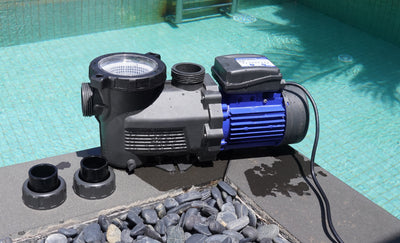


Removing water from a winter pool cover is safest when you identify the cover type first, inspect from the deck, place the pump while it is unplugged, and watch both the cover puddle and the pool water level. Do not walk onto the cover, drag the pump by its cord or hose, or try to free a pump that is frozen in ice. The exact cover and pump manuals are the final authority. A solid cover without a drain panel usually needs standing water pumped away, while a mesh or drained cover may need its drainage path cleared instead.
Start by identifying what is holding the water
“Winter pool cover” can mean several different systems, and the correct action changes with the cover.
| Cover condition | First action | What not to assume |
|---|---|---|
| Solid cover with no drain panel | Prepare a cover pump using the cover and pump manuals | Do not assume the pump can stay out through every freeze |
| Solid cover with a drain panel | Clear reachable leaves from the drain area using a long-handled tool from the deck | Do not assume a puddle always means the cover needs another pump |
| Mesh safety cover | Check whether debris, tension, or the pool water level is affecting drainage | Do not use one solid-cover pumping rule for every mesh cover |
| Automatic pool cover | Follow its dedicated pump and operating instructions | Do not apply winter safety-cover guidance without checking the automatic-cover manual |
LOOP-LOC explains that solid covers without drain panels use an automatic cover pump, while mesh covers and drain-panel systems manage precipitation differently.LOOP-LOC care guidance The principle is useful across brands, but the cover maker’s instructions—not a generic depth or schedule—control your setup.
Stop before pumping in these conditions
Stay on the deck and pause the job if:
- The cover is torn, frayed, leaking, pulled loose, badly sagging, or has damaged anchors or straps.
- You would have to step onto the cover, reach across unstable ice, or stand in pooled water.
- The plug, outlet, GFCI, cord, or connection is wet, damaged, taped, warm, sparking, or repeatedly tripping.
- The pump is frozen into ice or the hose is blocked by ice.
- The pool water level is already outside the cover manufacturer’s winter range.
- Water appears to be coming from the pool through a tear, seam, drain panel, or opening.
- You cannot route discharge without creating a slippery freezing area, sending water back toward the pool or house, or violating local drainage rules.
Wet pool decks and cord-connected equipment create a serious shock hazard. The U.S. Consumer Product Safety Commission recommends working GFCI protection around pool electrical equipment and emphasizes that wet skin and surfaces increase risk.CPSC electrical-safety guidance
A seven-step way to remove the water from the deck
1. Read both manuals before choosing a pump location
Check the winter-cover instructions for the correct water level, drainage method, tension, and freeze guidance. Then check the pump manual for its allowed liquid temperature, minimum operating depth, maximum head, hose size, power requirements, and automatic-switch behavior. This two-manual check matters because a pump can be operating normally while the cover or pool is moving outside its safe condition.
2. Inspect the whole system from solid ground
Walk the deck perimeter—never the cover. Look for:
- tears, pulled seams, loose straps, weak spots, or exposed sharp edges;
- leaves or sticks around the puddle and drain areas;
- a safe pump landing zone where water already collects;
- the current pool water level, using the manufacturer’s stated reference point;
- a discharge route that stays clear of the pool, house, doors, walkways, and neighboring property.
Meyco’s current cover-care guidance tells owners to inspect the cover regularly and keep the pool water within the cover’s stated winter range because low water can place undue stress on the cover.Meyco cover-inspection guidance
3. Clear only the pump’s landing zone
From the deck, use a long-handled pool tool to move leaves and twigs away from the intended intake area. You do not need to scrub the whole cover before pumping. Keep sharp debris away from the pump base. If the cover has a drain panel, clear that panel gently according to the cover manual rather than placing a pump on top of it.
4. Assemble and place the pump while it is unplugged
Attach the specified hose, check valve, strainer, base, and retrieval rope before the pump goes onto the cover. Keep the hose uncoiled and free of kinks. Using the supplied rope, handle, or manufacturer-approved placement method, lower the pump gently onto a clean existing low point. Keep it upright and stable. Do not create a new deep pocket by pushing down hard, and never pull the pump across the fabric by its power cord or discharge hose. The WAYNE WAPC250 manual provides a clear model-specific example: position the unplugged pump where water collects, keep its strainer in full contact with a clean cover area, use the retrieval rope, avoid pinching the hose and cord, and do not place the pump on a weak or leaking cover.WAYNE WAPC250 operating manual Your pump’s instructions may differ.
5. Route the hose before connecting power
Lead the hose away from the pool and the equipment area. Protect it from sharp coping, gates, vehicle traffic, and pinch points. Use a discharge point that can accept the flow without:
- washing out soil;
- sending water toward a foundation;
- crossing a walking path that may freeze;
- draining onto a neighbor’s property;
- returning water to the cover.
Keep the lift and hose length within the pump manual’s limits. An uphill run, narrow hose, kink, or long route can reduce flow, but there is no universal maximum that applies to every cover pump.
6. Energize from a dry position and watch the first cycle
With dry hands and dry footing, connect the pump only to the type of GFCI-protected outlet specified by the manufacturer. Keep plug connections out of water and weather exposure as the manual requires. Stay nearby for the first cycle. Confirm that:
- water is leaving the hose at the intended discharge point;
- the pump stays upright;
- the intake is not pulling fabric or debris;
- the hose and cord are not shifting against the cover edge;
- the pool water level is not dropping unexpectedly.
An automatic cover pump reduces repeated switching, but it is not permission to ignore the cover for the season.
7. Stop at the pump’s normal low-water condition
Let the pump reach the shutoff condition described in its manual. A thin film or a few shallow low spots may remain. Do not drag the pump around to chase every last wet patch. Before repositioning or retrieving the pump, disconnect power. Use the rope or handle—not the cord or hose—to bring it back to the deck. Clear the intake screen and inspect the cover surface where the pump rested.
Protect the cover while the pump is running
Cover damage can start where the pump, debris, fabric, hose, or pool edge meet, so each contact point deserves a quick check. Use these checks:
- Stable base: Use a pump and base intended for a pool cover, following the exact manual.
- Clean intake: Keep leaves, acorns, and sticks from trapping under the base or blocking the screen.
- Gentle placement: Lower the pump; do not throw, slide, or drag it.
- No sharp contact: Keep fittings, hose ends, and cord connections from rubbing against fabric or coping.
- No extra weights: Do not place bricks or improvised ballast on the pump or cover.
- No foot traffic: A safety cover is not a maintenance platform. Keep children, pets, and adults off it.
If a pump repeatedly tips, pulls the cover, exposes a tear, or cannot stay on a clean low point, stop. The setup needs a different manufacturer-approved placement method or professional attention.
Check that you are not pumping the pool itself
A cover pump should remove precipitation from the top of a solid cover—not quietly lower the covered pool. Snow, ice, or a heavy puddle can press a solid cover down until it contacts the pool water. LOOP-LOC warns that water can then seep through seams and be pumped away, which may lower the pool and place more stress on the cover and hardware.LOOP-LOC care guidance Compare the pool water level before and after pumping using the same reference point. Pause and investigate if:
- the pool level falls faster than the cover puddle explains;
- the cover depression deepens as the pump runs;
- water keeps feeding the pump without new rain or melt;
- the cover begins pulling harder on anchors or coping.
Do not “solve” the problem by publishing or following a generic winter water-level number. The correct range depends on the exact cover, pool, and closing method. Follow the cover manufacturer’s range or ask the installer or a qualified pool professional.
Wait for ice instead of fighting it
Do not chip, pry, shovel, or walk across ice to reach the pump. A sharp tool can damage the cover, and ice can hide water pockets, weak areas, and the pool edge. LOOP-LOC advises disconnecting its automatic pump if the unit will remain frozen in ice for an extended period and reconnecting it when melting begins.LOOP-LOC care guidance Treat that as brand-specific guidance: your pump and cover manuals may call for a different cold-weather shutdown or storage method. After thawing begins, inspect the cord, housing, hose, and cover before restoring power. If a pump has cracked, shifted, or been submerged at a connection, keep it unplugged and arrange qualified inspection or replacement.
Make the next storm easier
After the water is under control:
- Remove reachable debris from the cover or drain area.
- Confirm straps, springs, anchors, and edges still match the cover manual.
- Recheck the pool water level.
- Clean the pump screen with power disconnected.
- Straighten and inspect the hose and retrieval rope.
- Record the date, weather, puddle location, and any unusual cycling.
- Check the forecast and plan the next deck-side inspection after heavy rain, snowmelt, or a freeze-thaw cycle.
This is one small part of closing-season care. Use AQUASTRONG’s decision-based winter pool closing checklist to review the water, equipment, and cover as one system.
Know when the cover needs professional attention
Call the cover manufacturer, installer, or a qualified pool professional when the cover is damaged, the pool water level will not stay in range, the pump appears to be removing pool water, the anchors or coping are under unusual load, or safe deck-side placement is not possible. For electrical damage, a wet connection, repeated GFCI trips, or any uncertainty about the outlet, leave the equipment unplugged and use a qualified electrician. The safest result is not an empty cover at any cost—it is a controlled drainage path that leaves the cover, pool, and people in a safer condition.

About the author