
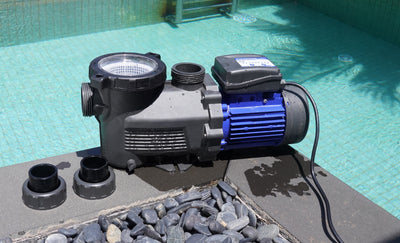


For a cover that requires pumping, automatic control is worth considering when rain or snowmelt repeatedly collects and you cannot start every pumping session yourself. Manual control can suit occasional water removal when someone can supervise the run and stop it at the required water level. Either choice needs a winter inspection plan. That is a practical selection framework, rather than a claim that one control mode pumps faster, tolerates more cold, or works with every cover. Start with the cover’s instructions, then the pump’s operating limits, then your availability.
Compare who does the work
Here, “manual” means an electric pump whose water-removal sessions you control. An automatic pump uses its documented switch or sensing system to initiate and end cycles. The exact mechanism and water levels vary by model. For example, Little Giant identifies its PE-1-PCP as a manual pool cover pump. Acquaer’s PCP025 manual describes water-contact sensor probes, automatic shutoff after a low-water run-on period, and restart when water rises again.
| Winter task | Automatic control | Manual control |
|---|---|---|
| Start a new session | The documented sensing system initiates a cycle when its conditions are met | A person starts the session |
| End a session | The documented low-water control ends the cycle | A person stops the pump before its operating limit is crossed |
| Check water is actually discharging | A person verifies the hose outlet and flow | A person verifies the hose outlet and flow |
| Clear leaves and inspect the cover | Still a person’s job | Still a person’s job |
| Handle cold-weather shutdown | Follow the exact pump and cover instructions | Follow the exact pump and cover instructions |
The decision is whether you can reliably take responsibility for every start and stop, or need the pump to perform those tasks between inspections.
Choose through three winter checks
1. Confirm the cover’s drainage method
Identify your cover before comparing pumps. A solid cover without a drain panel, a mesh cover, and a cover with a designed drain do not necessarily need the same approach. Check whether your manufacturer calls for pumping and specifies a supplied or compatible pump. LOOP-LOC’s care guidance addresses automatic pumping for its solid covers without drain panels. That supports checking the cover first; it does not establish that any automatic pump suits your cover. If you already have a specified pump, confirm the approved replacement requirements before changing control modes.
2. Check the whole winter operating path
Review the pump’s permitted liquid temperatures, placement, hose requirements, and cold-weather shutdown instructions. Check the actual discharge route as well: the hose must remain open, and the receiving area must accept the water without sending it back toward the pool or onto an unsafe walking surface. Follow local discharge requirements. If the water is frozen, the hose is obstructed, or the electrical connection is unsafe, resolve that condition before operating either type.
3. Match the control mode to someone’s availability
Use these scenarios as decision guidance:
- Repeated rain or melt, with inspections available: Automatic cycling can reduce the need for repeated human starts and stops, provided both manuals permit the setup.
- Occasional puddles, with someone available throughout pumping: Manual control can be a workable choice. That person must monitor the run and stop it at the model’s required condition.
- An extended absence: Arrange inspections by a pool professional or another responsible person. Automatic control does not inspect the pool water level, cover condition, or discharge route for you.
- Frequent freezing or unclear cold-weather instructions: Establish the shutdown, retrieval, storage, and restart plan before choosing by control mode.
There is no universal inspection interval or acceptable puddle depth for every cover. Set those details from your equipment instructions and site conditions.
Snowmelt needs pumping; ice needs a separate plan
A pump’s automatic switch does not establish freeze tolerance. The Little Giant PE-1-PCP manual warns against allowing that model to freeze because cracking or distortion can destroy it. LOOP-LOC advises disconnecting its supplied automatic pump if it will remain frozen in ice for an extended period, then reconnecting as melting begins. These are manufacturer-specific instructions; use your own pump and cover documents together. Keep people and pets off the cover. Do not chip or pry a frozen pump free. If safe retrieval from the deck is impossible, contact the cover manufacturer or a pool professional. Also watch the pool beneath the cover. LOOP-LOC warns that snow and ice can press its solid cover into pool water, allowing water to seep through seams and be pumped away. An automatic cycle can be functioning normally while the pool level falls. Check the manufacturer’s required winter water-level range, and stop to investigate unexpected loss.
Read the controls before comparing GPH
Ask what starts the pump, what stops it, and what the manual requires when those controls do not behave normally. A float switch and sensor probes are different mechanisms; verify the one actually fitted to the model. Thermal protection is another function. The PCP025 manual describes an overload protector that stops an overheated motor and resets after cooling. That does not establish freeze protection or replace water-level control. Then check flow under usable conditions. The PCP025manual explains that hose diameter and length affect flow; Little Giant’s PE-1-PCP performance table shows flow changing with head. Compare documented performance for your discharge arrangement, rather than treating a headline GPH value as a promised drainage rate. Consider the purchase together with the approved hose, electrical setup, cleaning, retrieval, and time required to supervise or inspect. Control mode alone does not prove a lower total cost.
Where the PCP025 listing fits
The PCP025 sold on aquastrong.co is currently labeled Acquaer. Its linked owner’s manual names PCP025 and documents sensor-based automatic operation. If that matches your unit’s nameplate, it is an example of automatic cycling to assess against your cover and winter operating requirements. Before ordering, confirm the exact model and specifications with support: the current listing’s Specifications section differs from its title and description. This guide therefore does not use those conflicting ratings to size the pump or promise a winter drainage time. For placement and hose-routing steps, use our winter pool-cover water-removal guide. For the broader seasonal plan, see the winter pool closing checklist.
Assign the winter checks before the first storm
Whichever mode you choose, name someone to check discharge flow, reachable intake debris, cover condition, pool water level, and the next freeze or thaw. Use the grounded GFCI-protected connection specified by the manufacturer. Disconnect power before placing, moving, retrieving, or cleaning the pump; keep plug connections dry. The WAYNE cover-pump manual documents these precautions, while CPSC’s pool electrical-safety guidance explains the wet-environment risks. Stop for a damaged cord, wet connection, repeated GFCI trip, damaged cover, or unexplained pool-water loss. Use a qualified electrician for electrical faults and a pool professional for cover or water-level problems. To assess the automatic option discussed here, review the PCP025 listing and linked manual, then confirm the model, cover fit, and cold-weather requirements before buying.

About the author