
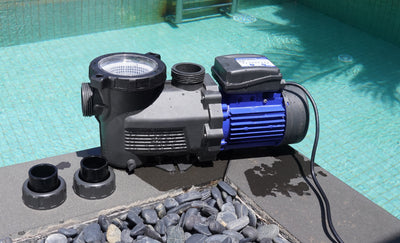


Choosing a home sewage pump can feel harder than it should. Product pages show horsepower, gallons per hour, head, outlet size, voltage, and more. But most homeowners do not need to become pump experts. Start with five simple questions:
- Does your home actually need a grinder pump?
- How high and how far must the wastewater travel?
- Will the pump match the pipe, power supply, basin, and switch?
- How will you know if the system is not working?
- Can the pump be reached safely for installation and future service?
If you cannot answer one of them, mark it unknown. That is useful information to take to a plumber, electrician, local utility, or AQUASTRONG support before you order.
1. First decide whether you really need a grinder
A grinder pump is not automatically the “better” version of a sewage pump. It is one type of pump for a particular wastewater system. Some homes use gravity, so wastewater flows away without a pump. Other homes need a pump because a basement bathroom or the whole house sits too low. Some systems grind waste so it can move through a smaller pipe under pressure. That is when a grinder pump may be part of the design. The key word is may. Augusta Utilities, for example, explains that grinder systems can be used where a normal gravity sewer is not practical and that each property is considered individually. Your local setup may be different. Before shopping, write down:
- What fixtures feed the pump: a toilet, bathroom, laundry area, or the whole home?
- Where does the wastewater go: a gravity sewer, a pressurized sewer line, a septic system, or somewhere you have not confirmed?
- Are you replacing a known grinder pump, or are you assuming you need one?
If you are replacing an existing unit, photograph the old label from a dry, safe position. The model number can tell a professional much more than “it is a one-horsepower pump.”
2. Match the route, not just the horsepower
A bigger motor does not automatically mean a better match. The pump has to move wastewater through your home's pipe route. Start with two details:
- Lift: how high the wastewater must travel.
- Discharge: the outlet pipe that carries wastewater away from the pump.
The pipe length, turns, valves, and destination also affect the job. That is why a maximum flow number on a product page cannot choose the pump by itself. A pump may list a maximum height and a maximum flow, but those are usually two different limits. They are not a promise that the pump will deliver maximum flow at maximum height at the same time. You do not need to calculate the full answer alone. Note the vertical rise, approximate pipe route, outlet size, and any known valves. Then compare those notes with the exact manual and a qualified site review. For a more detailed measurement list, use our home sewage-pump sizing guide.
3. Check the parts that must physically and electrically match
A pump can have attractive performance numbers and still be the wrong replacement. Confirm these four items:
Power
Match the exact voltage and frequency in the model manual to the power at your home. Two voltage versions may have different electrical details. Stop if you see a damaged cord, a warm or loose outlet, or exposed wiring. Also stop if water is near electrical equipment or you cannot identify the circuit. The CPSC household electrical safety checklist says damaged cords and unsafe electrical conditions need qualified help.
Outlet pipe
The pump outlet and the existing discharge piping must be reviewed together. A product's outlet size is not proof that it can be dropped into the existing system without plumbing changes.
Basin space
The pump and its controls need room inside the basin. Do not open a sealed sewage basin simply to take measurements. Use existing records, visible labels, and qualified service help.
Switch and controls
A float switch is a level-operated switch that starts and stops the pump. It must be able to move as intended. Ask what controls the pump, whether the existing alarm is separate, and how a high-water condition would be noticed. Homeowner discussions often focus on the motor, but repeat trouble may involve the float, controls, alarm, power, or pipe—not just the pump itself.
4. Think about the next service visit before the first installation
A sewage pump should not be boxed behind a cabinet or made difficult to reach. A future technician may need to inspect the basin, controls, valves, or pump. The City of Bainbridge Island tells users of its grinder systems to keep the equipment easy to reach. Rules and service plans vary by location. Still, every homeowner can ask: Can a qualified person reach this system without tearing out cabinets or fixtures? Pause and get professional help when the job involves:
- Opening a sealed basin
- Contact with sewage
- Changing the vent, valves, or discharge piping
- Moving the basin or nearby fixtures
- Altering wiring, an outlet, a breaker, or an alarm
- Confirming permits or local plumbing and electrical rules
The 2024 International Residential Code treats the pump, basin, vent, support, valves, flow, and lift as one system. It is a model code, not the final rule for every address. Check local requirements.
5. Compare an exact model with your five answers
Once you know that a grinder pump is the right category, you can compare a real product without guessing. The AQUASTRONG Cast Iron Sewage Grinder Pump is one model to put on that comparison list. For the exact 220V/60Hz SEP100CA version, the official manual lists:
- 1 HP
- 4.1 A
- Maximum head of 40 ft
- Maximum flow of 4,200 GPH
- 2-inch NPT outlet
- 6 m power cord
Use those details to compare the pump with your notes. They do not prove a match for your home.
| Confirmed by the reviewed 220V manual | Still needs to be confirmed for your home |
|---|---|
| Model, voltage, current, maximum head, maximum flow, outlet, cord length | Required flow at your actual lift and pipe route |
| Media exclusions in the exact manual | Basin space, float movement, controls, alarm, valves, and service access |
| 220V/60Hz variant documentation | Available power, local approval, and the exact documentation for any other voltage version |
The product page presents more than one voltage choice. Do not apply the reviewed 220V specifications to another version unless its exact documentation confirms them. Also, do not treat the word grinder as permission to flush anything. Follow the exact product manual and local sewer guidance. The reviewed SEP100CA manual excludes strongly corrosive liquids, abrasive solids, and flammable or explosive liquids.
Make one short note before you buy
Put these answers on one page:
- Job: What fixtures feed the pump, and where does the wastewater go?
- Route: How high does it rise, and what is the approximate pipe route?
- Match: What are the existing voltage, outlet size, basin, and pump model?
- Controls: What starts the pump, and is there a high-water alarm?
- Access: Can the system be reached safely for service, and which questions need a licensed professional or local authority?
If you are replacing a pump, our replacement documentation guide shows what to record before anyone assumes the new unit is a direct swap. Then open the exact product manual beside your note. If the system truly calls for a grinder pump, review the AQUASTRONG SEP100CA product page and ask AQUASTRONG support or a qualified installer to resolve the unknowns before ordering. The best choice is not the pump with the most impressive headline number. It is the pump whose exact documentation matches the job your home actually needs.

About the author