
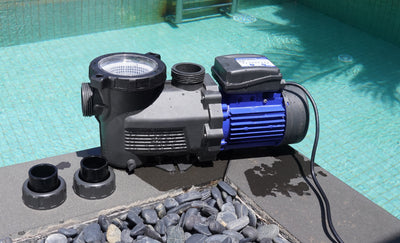


When a pool pump will not start, the safest first step is to leave the equipment closed. Treat the situation as an observation task, not a repair task: look for clear external information, write down what you see, and stop as soon as electrical safety is in doubt.
If anyone in or near the pool feels tingling, cramps, or an unexplained shock, get people out of the water. Avoid touching metal equipment. If you can turn off power safely, do so, then call 9-1-1. The U.S. Consumer Product Safety Commission identifies pumps as electrical pool equipment and warns that wet pool areas increase shock risk. Read the CPSC guidance.
For any other no-start situation, the useful goal is simple: give qualified service or model-specific support a clean record of the symptom without taking chances around the equipment.
Treat these signs as a stop, not a troubleshooting task
Do not open the motor, electrical cover, junction box, timer enclosure, or control panel. Do not work on wiring, capacitors, breakers, bonding, or GFCI protection.
Stop and call qualified help if you notice a burning smell, smoke, scorch marks, visible damage, wet wiring, water around electrical parts, repeated protective-device trips, or a sound you cannot safely identify. The same applies when the pump was recently exposed to water or when someone may have experienced a shock.
A no-start symptom does not tell you which part failed. It tells you to protect people first and preserve the evidence that will make the next conversation more useful.
Use one note: observe, record, escalate
Instead of trying a sequence of resets or repairs, make a short three-part note.
Observe: What can you see from a dry, safe position? This may include a message on the familiar controller, the displayed mode, visibly low water near the skimmer opening, an obvious external leak, or a valve that is clearly not in its usual position.
Record: Write down the time, the exact display message or indicator, the last normal operating time you remember, and any recent event such as a storm, cleaning, schedule change, or power interruption.
Escalate: Mark anything electrical, unfamiliar, wet, damaged, or unclear for qualified service. "I do not know what this control or connection does" is useful information, not a reason to keep testing.
This framework is not a diagnostic chart. It is a way to avoid turning an uncertain situation into a riskier one.
Confirm the normal command from the outside
If you normally use a schedule, timer, automation screen, or on/off setting, check only the familiar external controls. A changed schedule or paused mode can make a working pump appear inactive.
Take a photo of the display and note the selected mode and time. Do not change unfamiliar programming, repeatedly reset protective devices, or open a controller to look for a cause. If you cannot tell which control normally governs the pump, stop there and include that uncertainty in the service-call note.
Make visible observations without opening equipment
From a dry, safe position, look at the pool and equipment area without removing a lid, forcing a valve, or reaching into a wet or unfamiliar component.
Useful observations can include:
- Whether the pool water is visibly low around the skimmer opening
- Whether there is an obvious leak around the equipment pad
- Whether there is visible damage, odor, smoke, or an unusual sound
- Whether a valve has clearly been moved from its usual position, if you already know that system
These observations do not establish a cause. They help a technician or support team decide what model-specific information they need next.
Build a service-call-ready record
Before you contact service or support, collect four details if they are visible and safe to record:
- The exact pump model from the nameplate or existing paperwork.
- The control display, selected mode, and any message shown.
- What happened before the no-start symptom appeared.
- What you can see from outside the equipment: water level, leak, odor, visible damage, or unusual sound.
Photos taken from a dry position can help. Do not remove panels, move wiring, or rearrange equipment to get a better image.
AQUASTRONG provides manuals and installation guides by model. Use only the manual that matches the nameplate or product documentation for your exact pump, not a similar-looking unit. Find AQUASTRONG product manuals.
Let "not clear" be the escalation point
A pool pump combines water, electrical equipment, controls, and site-specific installation conditions. If the cause is not clear after safe external observations, a qualified pool professional or licensed electrician is the right next step.
Ask a focused question: "What exact model and installation information do you need from me to assess this safely?" That keeps the discussion tied to the actual system rather than an online guess.
A calm next step
A pump that will not start deserves a careful response, not a rushed repair. Keep people out of the water if electrical safety is in doubt, make only the observations you understand, and collect the model and symptom details a qualified professional will need. That is the safest route to a useful diagnosis.

About the author