
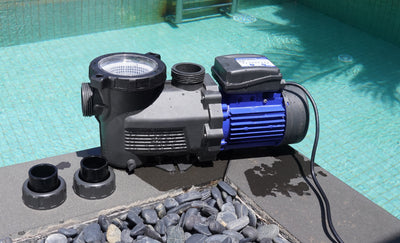


Quick answer: a sand filter is one part of the circulation loop
A pool sand filter is a vessel that holds filter media and works with the pump to catch suspended debris as water circulates through the system. It is important, but it is not the entire water-care plan. The pump moves water, the filter media removes some physical debris, and water testing and treatment address separate conditions. That distinction matters when the water looks cloudy or when you are deciding what to service. A filter problem, a circulation problem, and a water-treatment problem can overlap, but they are not automatically the same problem.
Picture the system before you picture the tank
In a typical pool circulation loop, water is drawn from the pool through its intake points, moved by the pump, sent through the filter, and returned to the pool. A sand filter sits in that path as a physical filtration stage. The exact plumbing path, valve positions, media quantity, flow limit, and service procedure depend on the filter model and the rest of the system. A manufacturer’s Sand Dollar/Cristal-Flo II manual, for example, treats the sand filter as a circulation component and pairs its use with pressure, flow, installation, and local-code warnings. That helps explain why your own filter manual must control the details. Read the model-specific reference.
What the filter media does
Filter media provides surfaces that help capture debris from circulating water. As water moves through the media, particles can be retained while filtered water continues back into the system. That is a useful working model for an owner, but it is not a promise about how clear the water will become or what a specific filter can remove. The result depends on the exact system, the condition of the media, the pump and flow conditions, the pool load, and the rest of the water-care plan. Avoid making a maintenance decision from a generic claim such as “more media always filters better” or “a filter alone will fix cloudy water.” Those statements skip the model limits and the other causes that may need attention.
What a sand filter cannot replace
Filtration and sanitation work together, but they do different jobs. The CDC advises residential pool owners to regularly test and manage disinfectant and pH. In other words, circulating water through a filter does not establish that the water is properly treated. Read the CDC guidance. When water quality is a concern, separate the questions:
| Question | Why it is separate |
|---|---|
| Is the circulation system moving water as expected? | A pump, valve, blockage, or air-leak issue can affect flow |
| Is the filter operating within its own manual’s limits? | Media, pressure, valve, and service details are model-specific |
| Are disinfectant and pH being tested and managed? | Filtration does not replace water treatment |
| Has the pool had unusual debris, swimmer load, weather, or a chemical event? | Those conditions can change the response needed |
This simple split helps avoid using the filter as the explanation for every water-quality symptom.
Use the manual for service decisions
A sand filter can be part of a pressurized circulation system. Before you reposition a valve, open a tank, remove a cover, add or replace media, or plan a backwash or other service task, locate the exact model manual. The manual should be the source for:
- The permitted operating and service sequence.
- Any pressure-related warnings.
- The correct media specification and quantity.
- The placement and use of valves or air-relief features.
- Winterizing, inspection, and maintenance instructions.
- The conditions that require a pool professional.
Do not borrow a pressure limit, media amount, backwash duration, or valve sequence from an unrelated filter. Small differences in model and plumbing can change the safe procedure.
Know when to stop and get help
Stop the owner-level inspection and contact a qualified pool professional if you find a cracked tank or fitting, a persistent leak, damaged hardware, an unclear manual, a pressurized component you are not trained to service, or a system symptom that returns after routine care. If electrical equipment is involved or water is near an electrical component, stop and use the appropriate qualified help. The CPSC identifies pumps and filters as electrical pool equipment in a wet environment. Review the CPSC guidance.
The useful next step
A sand filter is easiest to understand as one checkpoint in a larger loop: water moves, media captures some debris, and water testing/treatment continues alongside filtration. Find your exact manual before you service it, and use a professional when pressure, plumbing, electrical, or model-specific questions are not clearly covered.

About the author